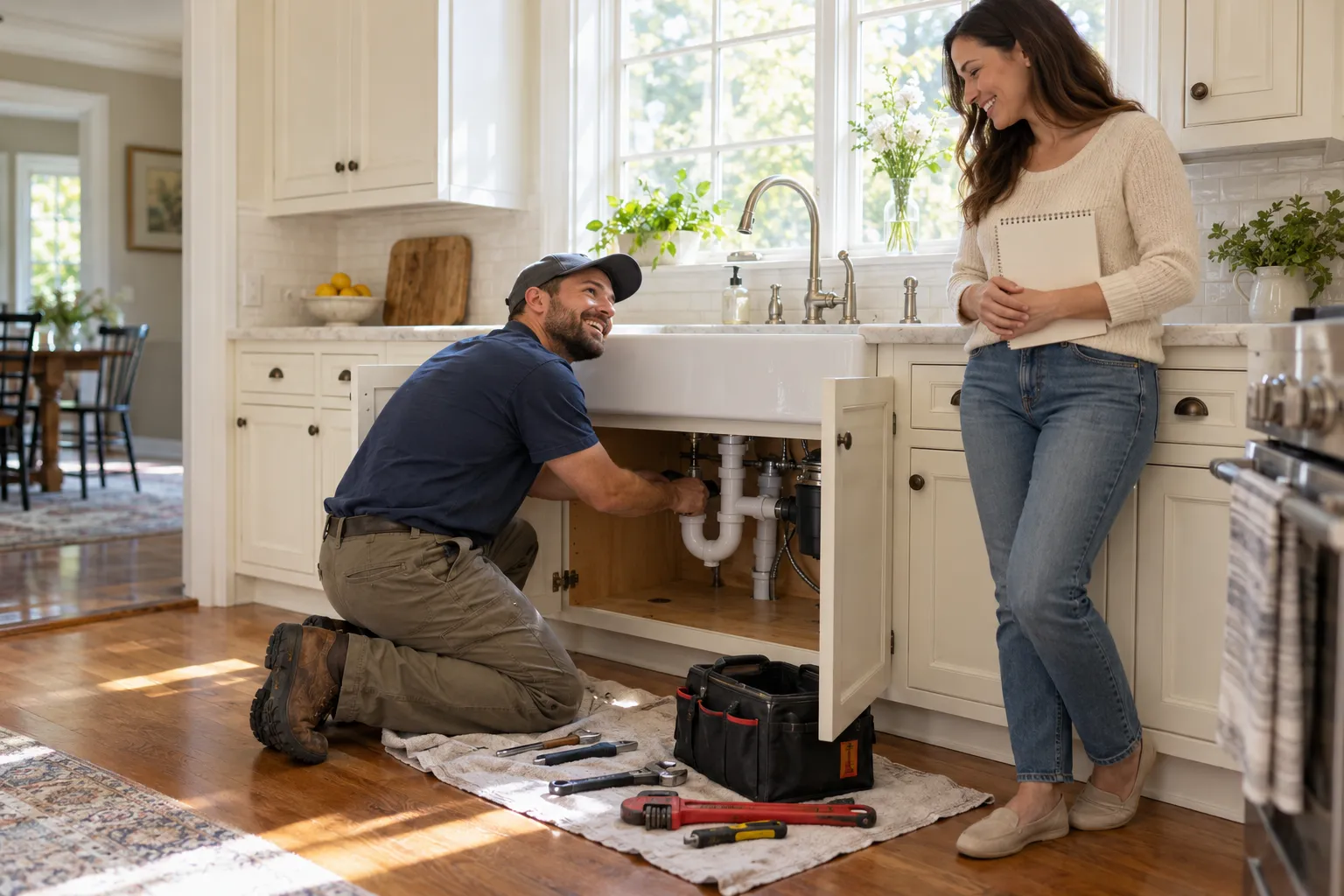
Plumbing Questions Homeowners Ask Most
Questions and answers
What can I safely do myself when a pipe or drain fails?
Start with the basics. Shut off the water at the main valve, or the fixture valve if there is one. Turn off the water heater if pipes are affected. Move rugs and boxes out of the way. Use a plunger on a simple clog. Stop there. Cutting pipe, using harsh chemicals or forcing a snake can turn a small fix into a costly one.
When is a clogged drain more than a DIY job?
Call a provider if several drains back up at once, water gurgles in the tub when you flush, or a clog returns within days. Those signs often point to a main line problem, not a single fixture. A plunger will not reach it. Chemical cleaners can also damage older cast-iron and galvanized pipes, so skip them and ask a provider to take a look.
How much does emergency drain clearing usually cost?
Typical U.S. prices for clearing a drain often run from about $100 to $400 for a simple clog. A main line clog can cost more, and camera inspections add to the bill. Price drivers include access, how deep the clog sits, and the time of day. Ask for a written quote before work starts, and compare it with another if you can.
What does sewer line repair cost, and why does it vary so much?
Typical U.S. ranges run from a few hundred dollars for a spot repair to several thousand for a long replacement. Pipe depth, length, material, and whether the provider digs or uses a trenchless method all move the price. Driveways, trees and finished basements add work. A written quote with the method spelled out helps you compare offers fairly.
Will my homeowners insurance cover plumbing damage?
It depends on your policy. Some policies may cover sudden damage, such as a burst pipe, but often exclude slow leaks, wear and tear, or sewer backup unless you added that coverage. Read your policy or ask your agent before you decide. Providers can often help document damage with notes and photos for a claim. Keep every receipt and written quote.
How can I keep my plumbing from failing in winter?
Freeze-thaw winters are hard on pipes. Insulate pipes in basements, crawl spaces and exterior walls. Keep heat on in cold snaps, and open cabinet doors under sinks on the coldest nights. Disconnect outdoor hoses early. Know where your main shutoff is, and test it once a year. A few minutes of prep can save a lot of money.
How do I keep repairs from taking over my family's week?
Plan around life. Tell the provider about school runs, work calls and naps when you ask for an estimate. Ask how long the job should take, whether water will be off, and what will be torn up. Clear the work area ahead of time. A clear schedule in the written quote keeps surprises and disruption lower.
Is it worth getting more than one quote in an emergency?
When water is spreading, stop the leak first, then compare quotes if you can. For a drain or sewer problem that is contained, a second written quote often takes little time and can show big price gaps. Check what each quote includes, such as cleanup, camera inspection and permits. A small number on paper is not always the fairest deal, so ask each provider to explain what the price covers.
Get in touch
Have a leak, a backup or a slow drain? Request a callback to check provider availability, or send a request and compare written quotes.
No obligation