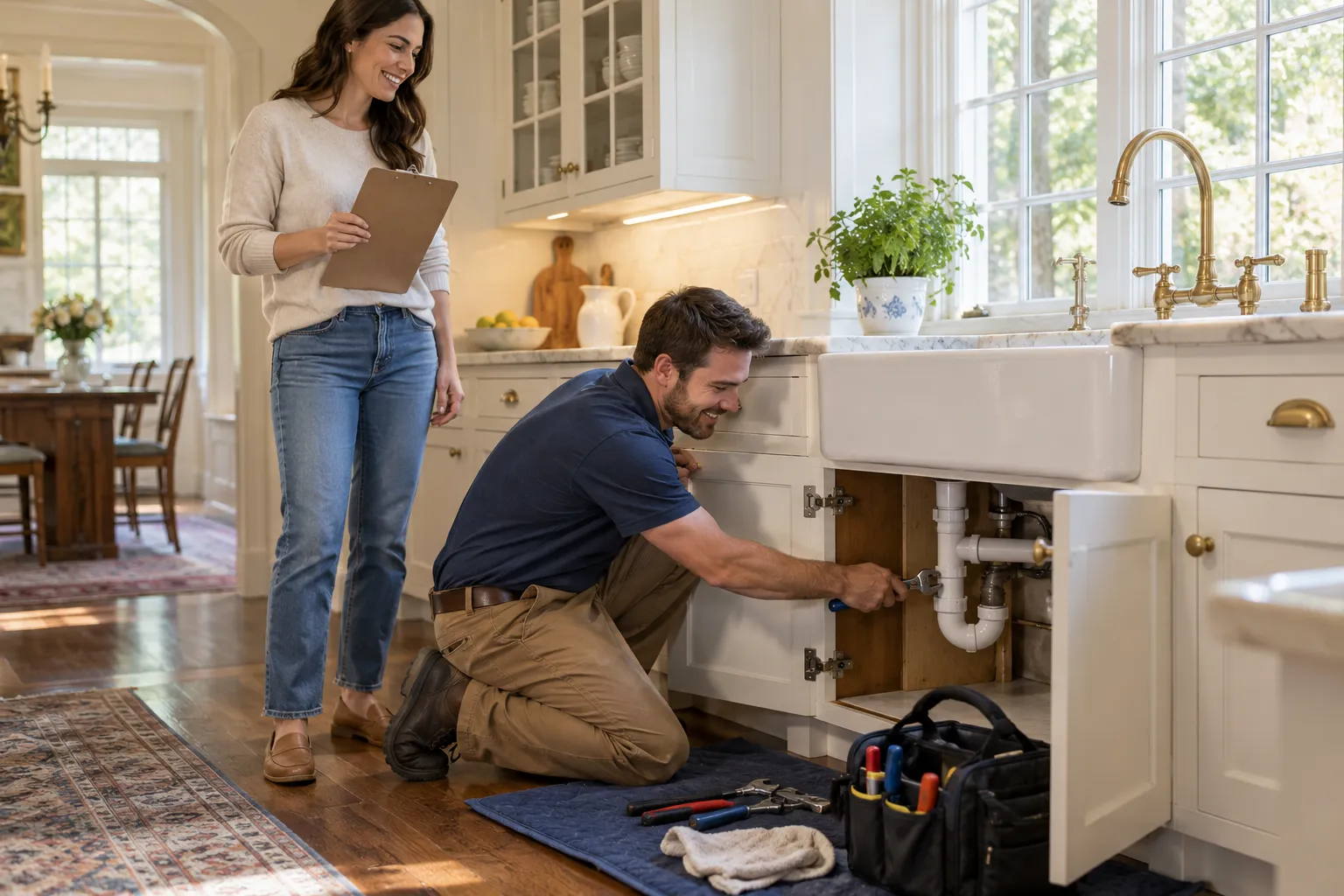
A plumbing emergency rarely shows up at a good time. A pipe splits during the school run, a toilet floods before guests arrive, or the water heater leaks in the basement. Requestsrepresents Plumbing is a referral service that connects Mentor homeowners with independent local providers who handle these problems.
We do not do the plumbing ourselves. The provider does the work and sets the price. Our job is to help you reach someone quickly, then compare written quotes so the repair fits your budget and your family's schedule. Older colonial, split-level and rowhouse plumbing, with aging cast-iron and galvanized pipes, can fail in surprising ways. Knowing what drives the price helps you stay calm and decide well.
Water Is Spreading: Start Here
If water is flowing and you cannot stop it, work through these steps in order. Each one takes a minute or less.
- Shut off the main water valve. In many homes it sits near the water meter, in the basement, or where the supply line enters the house.
- Turn off the water heater power or gas if the tank is leaking or the area is flooded.
- Switch off electricity to wet areas only if you can reach the panel safely and dry. Otherwise stay out of the water.
- Move rugs, boxes and electronics out of the path of the water.
- Take photos and short video before you clean up.
Then reach out to a provider. Availability varies by provider, so ask about it right away.
What Counts as a Plumbing Emergency
A real emergency is water you cannot control, or water that could harm your home or your health. Think of a burst pipe, a supply line spraying behind a wall, a water heater leaking steadily, or a toilet overflowing with no end in sight. A sewage smell with slow drains throughout the house also belongs here, because it can point to a bigger backup.
Seeing water on the ceiling, hearing running water when nothing is on, or finding a warm, damp spot on the floor are also warning signs. Treat them seriously.
What Can Wait for a Planned Visit
Not every problem needs a rush call, and rush work can cost more. A dripping faucet, a running toilet, or one slow sink usually can wait a day or two. Shut off the fixture valve, set a bucket, and book a regular visit.
This matters for busy households. A planned appointment lets you pick a time that does not clash with school pickup, work calls or practice. If you are unsure which category you are in, describe the problem to a provider and ask.
Burst and Frozen Pipes
Freeze-thaw winters are hard on pipes in unheated basements, crawl spaces and outside walls. A pipe often freezes first and splits as it thaws, so the flood may start after the cold snap ends.
If a faucet gives only a trickle in freezing weather, a pipe may be iced over. Open the tap, keep the heat on, and do not use a flame to thaw it. Shut off the main valve if you see any wet spots. Older galvanized and cast-iron lines can also crack from age, not only from cold.
Water Heater Trouble
A tank that leaks from the bottom is usually near the end of its life, and the repair is often a replacement. Rusty water, rumbling noises or a pressure valve that keeps dripping are also signs of trouble. Turn off the power or gas and close the cold water supply to the tank.
Ask the provider to compare repair and replacement in writing. A newer tank can cost more upfront but may save you from a second emergency.
Overflowing Fixtures and Stubborn Backups
When a toilet will not stop rising, lift the tank lid and close the float or shut the valve behind the bowl. Do not keep flushing. If several drains gurgle or back up together, stop using water and tell the provider, since the cause may be deeper in the line. Humid summers and heavy storms can make this more common in homes with basements.
Why Waiting Gets Expensive
A small leak can become a large bill. Water soaks drywall, flooring and insulation, and mold can start in a damp space in a couple of days. A repair that might have been a modest pipe fix can grow into a repair plus drying, wall work and flooring.
Acting early is a smart way to keep costs in check. It does not mean accepting the first number you hear.
Keeping the Household Running
While you wait, make a simple plan for the day. Fill a few jugs before the main goes off, so you have water for drinking and brushing teeth. Pick one dry bathroom if you have more than one. Tell the provider about school and work schedules, pets and any steps or tight spaces.
Many providers can respond quickly, and some will stabilize the problem first and schedule bigger work for a calmer time. That trade-off can protect both your week and your budget. Plan around life where you can.
What Drives the Price
Know the price drivers before you sign. The main ones are:
- The time of day, since after-hours work can carry a premium
- How hard the pipe is to reach, such as behind finished walls
- Pipe material and age
- Parts needed, from a small valve to a full water heater
- Drying, wall repair and cleanup, which are often priced separately
Ask which of these are in the quote and which are not.
Choosing a Provider Without Rushing
Even in a hurry, you can ask a few things. Is the provider licensed where you live? Is there a diagnostic or trip fee, and does it apply toward the work? What is the price for the repair as described? Is the number written down?
Quote before work is a good rule. If you can get two written quotes, compare what each includes, not only the total. A short, clear quote often beats a vague one that looks smaller at first.
After the Repair
Keep your invoice and photos. Some policies may cover sudden damage, so check your policy, and providers can often help document damage for a claim. Ask the provider what caused the failure and whether nearby pipes show the same wear.
It also helps to find your main shutoff before the next problem, label it, and make sure everyone at home knows where it is. For older homes, ask about a planned upgrade of tired pipes, which is easier on a budget than another emergency.
What's Included
Burst Pipes
Providers in our network can help stop active leaks, repair split lines, and advise on what to dry out or replace afterward.
Water Heater Leaks
Get help with leaking tanks, failed valves and no hot water, plus a written repair or replacement quote.
Overflowing Toilets and Fixtures
Help with stuck floods, failed supply lines, and fixtures that will not shut off properly.
Frozen Pipe Response
Providers can thaw safely, check for hidden cracks, and explain how to prevent a repeat freeze.
Typical Emergency Plumbing Costs
Prices vary by home, pipe material, access and timing. These are typical U.S. ranges only, not quotes. Ask each provider for a written quote that lists labor, parts and any trip fee before work starts.
| Service | Typical range | Notes |
|---|---|---|
| Diagnostic or trip fee | $75 – $250 | Some providers apply it to the repair |
| Burst pipe repair (one section) | $150 – $1,000 | Depends on access and pipe type |
| Frozen pipe thawing | $150 – $600 | More if the pipe has split |
| Water heater repair | $150 – $800 | Valves, elements or thermostats |
| Water heater replacement | $1,200 – $3,500 | Tank size and fuel type matter |
| Toilet or fixture supply repair | $100 – $450 | Includes parts in many cases |
How It Works
Stop the Water
Close the main valve, switch off the water heater, and take quick photos of the damage.
Contact a Provider
Request a callback to check availability, or send an estimate request describing what is happening.
Review the Quote
Read the written scope, price drivers and any trip fee before agreeing to start.
Repair and Follow Up
The provider completes the work, then you keep the invoice and ask about prevention.
Why Call Requestsrepresents Plumbing
Quote First
Compare written quotes when time allows, so the price and scope are clear before any work begins.
Local Providers
Independent providers near you who know the local housing, from older rowhouses to split-levels.
Family-Friendly Planning
Choose a plan that limits mess and fits school runs, work calls and routines.
No Obligation
Asking for an estimate costs you nothing extra, and you decide whether to hire.
Other Services
Need residential emergency plumbing in Mentor?
- Reach independent local plumbing providers
- Compare written quotes before work
- Plan repairs around family life
- No obligation to hire
Residential Emergency Plumbing FAQ
What should I do first if a pipe bursts in my house?
Shut off the main water valve right away, then turn off the water heater if it is near the leak. Move belongings out of the way, take photos for your records, and contact a local provider to check availability.
How much does an emergency plumber cost?
Typical U.S. costs run from about $150 for a simple repair to several thousand for major work. After-hours timing, access and parts all change the price, so ask for a written quote.
Does homeowners insurance cover a burst pipe?
Some policies may cover sudden damage, but coverage varies and gradual leaks are often excluded. Check your policy and call your insurer. Providers can often help document damage for a claim.
Get in touch
Have a leak, a backup or a slow drain? Request a callback to check provider availability, or send a request and compare written quotes.
No obligation